
A bad review feels personal, but the person reading it later is a stranger deciding where to eat. Your reply is written for that stranger. This guide gives a simple structure for replying, sample replies you can adapt, and the habit that matters more than any single reply: fixing the cause.
The short answer
Reply calmly, once, in a few lines. Thank the guest, name the problem, apologise without excuses, offer a way to continue the conversation offline, and then fix what went wrong. Never argue in public, never share the guest’s private details, and never offer money in the reply.
Before you write a word
- Wait. Do not reply while angry. A reply written an hour later is almost always better.
- Check the facts. Find the bill, the date and time, and ask the shift manager and the kitchen what happened.
- Decide what is true. Some complaints are fair, some are partly fair and some are unfair. Your reply differs for each.
- Decide the gesture. If a refund or a return invitation is appropriate, plan to offer it privately.
A five-part reply
- Thank them for taking the time to write.
- Name the issue in your own words, so they know you read it.
- Apologise once, plainly, for the experience. Do not add “but”.
- Take it offline with a phone number or email for a manager.
- Say what you are changing if you are changing something real.
Keep it to a few lines. Long replies read as defensive.
Sample replies you can adapt
These are examples. Change the details so each reply is true for that guest and that visit.
Slow service
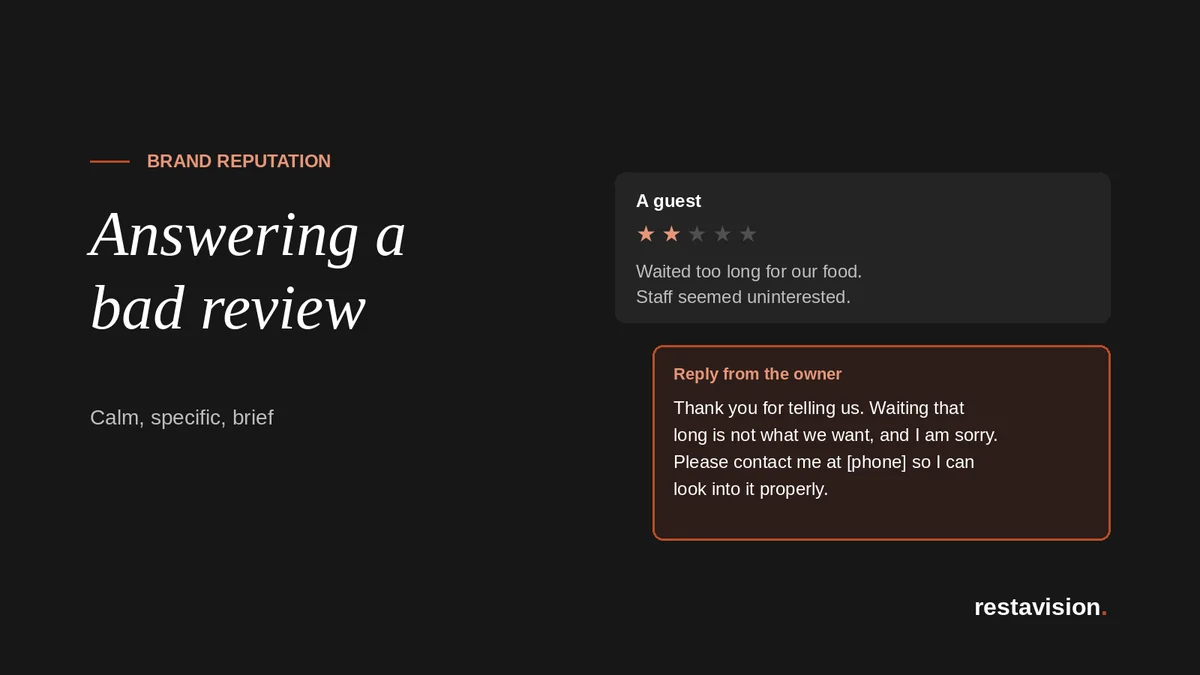
Thank you for telling us about your visit. Waiting that long for your food is not what we want for any guest, and I am sorry it happened. I would like to understand what went wrong on the day. Please contact me at [phone or email] so I can look into it properly. We have already spoken to the team about how we handle busy hours.
Food quality
Thank you for the honest feedback about the [dish]. It should not have reached you the way you describe, and I am sorry. I have shared your comments with our kitchen team. If you are willing to talk, please contact me at [phone or email] and I will be glad to make this right.
Rude staff
I am sorry that you were treated that way. It is not how we want guests to feel in our restaurant. I have asked the manager on duty that day to look into what happened. Please contact me at [phone or email] so that I can hear it from you directly.
A complaint that does not match your records
Thank you for writing. We have checked our records for that evening and we could not find the issue exactly as described, but we take your comments seriously and would like to understand better. Please contact me at [phone or email] so that we can look into it with you.
Mistakes that make it worse
- Arguing. Even if you win the point, readers see a restaurant that argues.
- Copying one reply everywhere. Guests and other readers notice template replies.
- Blaming the guest or the platform. It sounds like an excuse.
- Sharing private details such as what the guest ordered, who they dined with or their phone number.
- Offering free food in public. It can encourage others to complain for a discount.
- Replying and changing nothing. The next guest has the same experience.
Fix the cause, not just the review
Treat each review as free feedback. Once a month, list the complaints and sort them: food, service, speed, cleanliness, price. If one group keeps appearing, the problem is in the process and not in the guest. Our guide on restaurant reviews and ratings covers how to build review habits across Google and Zomato, and the brand reputation service covers doing it as a system.
Do not forget the happy guests
A restaurant that only hears from unhappy guests will look worse than it is. Make it easy and natural for satisfied guests to leave a review, for example with a QR code at the table or on the bill. Ask everyone, not just the people you expect to be positive, and do not pay for or reward reviews. See also our guide on unfair and fake reviews.
Common questions
Should I reply to every negative review?
Yes, wherever you can reply. Future guests read the replies as well as the review, and a calm, specific reply shows how you treat people when something goes wrong.
How quickly should I reply?
Within a day or two is a sensible target. A quick reply shows you are paying attention, but do not rush a reply while you are still angry. Write it, wait, then post it.
Should I offer a refund or a free meal in the reply?
Keep money out of the public reply. Invite the guest to contact you directly, and settle any refund or gesture of goodwill there.
What if the guest is wrong?
Check the facts first, then reply politely without arguing. State what you can confirm, thank them for the feedback and offer to talk. Readers judge your tone more than your evidence.
What if the review is fake or unfair?
Reply only if it helps, and report it through the platform if it breaks the platform's rules. Our guide on unfair and fake reviews covers what you can and cannot do.
Can replies improve my rating?
A reply does not change the stars on its own. A guest who feels heard may update a review, but that is their choice. The bigger gain is fixing the cause so the next guest has a better meal.
Turn reviews into feedback you can use
Tell us about your restaurant and where the complaints come from.
