
The weeks from Navratri to Diwali are among the busiest of the year for restaurants, cafés, sweet shops and caterers. Families eat out, offices book parties, guests order gift boxes and bulk sweets, and delivery orders climb. The same weeks bring staff leave, higher ingredient prices and closer food-safety checks. The outlets that do well are the ones that plan their menu, purchasing, team and checks before the rush, not during it.
Know the festive calendar
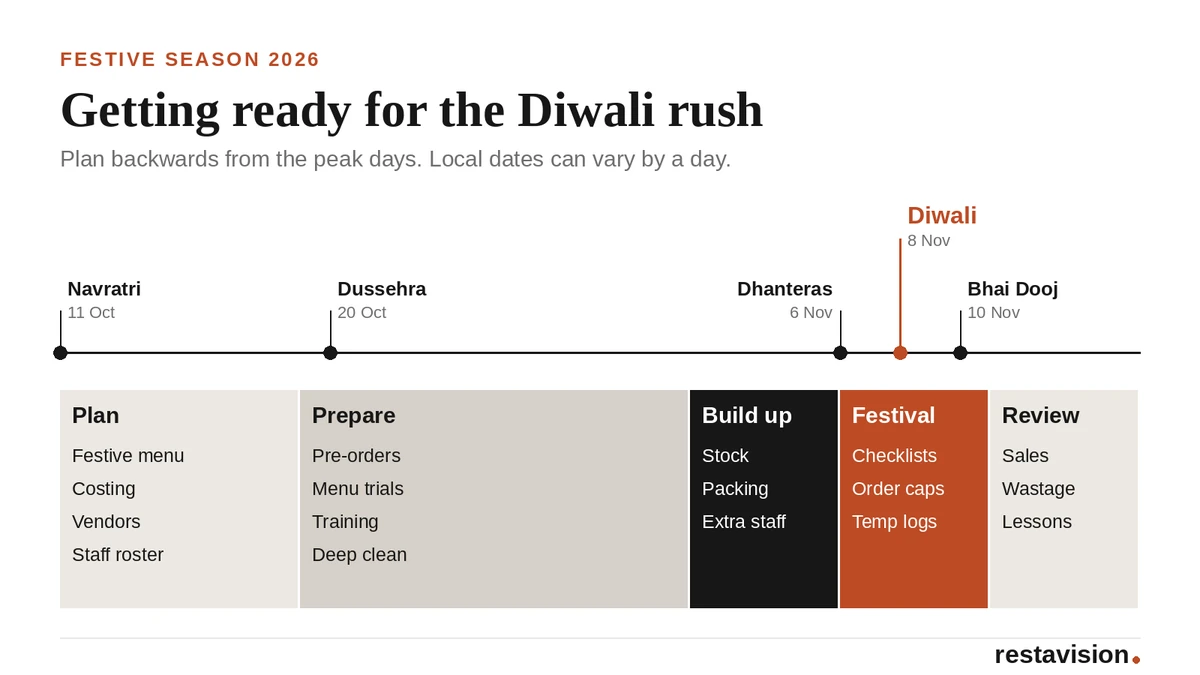
Start with the dates and work backwards. Peak days differ by city and community, so add local festivals and your own sales history.
| Festival | Date | What it usually means for restaurants |
|---|---|---|
| Navratri begins | 11 October | Fasting menus and changing demand in many regions; dandiya and garba events. |
| Dussehra | 20 October | Family outings and celebrations; Durga Puja celebrations fall around the same days. |
| Dhanteras | 6 November | Start of the Diwali rush; gifting and sweet orders peak. |
| Diwali | 8 November | Heavy takeaway, sweets and gifting; dine-in often quieter on the evening itself. |
| Govardhan Puja and Bhai Dooj | 10 November | Family meals and visits; strong lunch and sweet demand. |
Local observance can vary by a day, so confirm the dates that apply in your city.
Forecast demand and plan purchasing
Use last year's sales for the same festive days as a starting point, then adjust for new menu items, reservations, pre-orders and any change in your outlet or area.
- Forecast by day and by item: peak days are rarely the same as an ordinary weekend.
- Take pre-orders with a cut-off: they turn guesses into firm numbers for sweets, hampers and bulk orders.
- Lock in vendors early: confirm quantities, prices and delivery slots for high-value and fast-moving items, with a backup supplier for each.
- Check quality at receiving: dairy products, khoya, paneer, ghee, edible oils and dry fruits deserve extra care. Buy from licensed suppliers, check temperature, smell, texture and packaging, and reject anything doubtful.
- Plan storage: confirm cold-room and freezer space before the deliveries arrive, and label and date everything.
In October 2026, FSSAI directed state food safety authorities to step up inspections and sampling during the festive season, with a focus on milk and milk products, sweets, snacks, edible oils, beverages and ghee. Good purchasing records and supplier licences are your first line of evidence.
Plan staff before the leave requests arrive
Many team members want to travel home for Diwali, often in the same week that demand peaks. Settle the roster early and openly.
- Publish a festive leave calendar now, and agree who works which days.
- Arrange extra staff for packing, dispatch and dishwashing, and train them before the peak.
- Cross-train key team members so that one absence does not stop a station.
- Consider a festive incentive for working the peak days.
- Brief the whole team on the festive menu, pre-order process and food-safety checks.
Handle bulk, gifting and corporate orders
Bulk orders can make the season, or break a busy kitchen. Treat them as a separate process with clear limits.
| Step | What to fix in advance |
|---|---|
| Order form | Items, quantities, packing, delivery or pickup time, contact person and any allergy or dietary needs. |
| Advance payment | A deposit or full payment before production starts. |
| Cut-off and capacity | A last date for orders and a daily maximum the kitchen can produce safely. |
| Production plan | A day-by-day schedule that does not clash with regular service. |
| Packing and labels | Box sizes, labels with product details and shelf life, and seals for delivery. |
| Dispatch | Delivery slots, vehicle or partner, and a sign-off when the order is handed over. |
If you sell loose sweets from trays, FSSAI requires a best-before date to be displayed for each item. Packed gift boxes need proper labels, so check the labelling requirements before printing boxes.
Keep food safety tight at high volume
Food-safety lapses become more likely when volumes rise, extra staff join and storage is full. Keep the basics visible and checked every shift.
- Temperature control: keep hot food above 60°C, cold food at or below 5°C, and cool cooked food quickly before storage.
- Separation: keep raw and cooked foods, and vegetarian and non-vegetarian preparation, apart.
- Hygiene: handwashing, clean uniforms, gloves where needed, and no work for anyone who is unwell.
- Clean and pest-free: schedule a deep clean and pest control before the rush, not during it.
- Records: keep temperature logs, cleaning checklists and supplier records up to date. They protect you during an inspection.
Our guide to restaurant hygiene and FSSAI compliance covers these controls in detail.
Run the peak days smoothly
- Use reservation slots and set menus for large groups to keep table turns predictable.
- Set a separate pickup point for takeaway and bulk orders so they do not crowd the entrance.
- On delivery apps, set realistic preparation times and switch off items the kitchen cannot keep up with.
- Think carefully before running discounts on days that are already full. Our guide to delivery app commissions and margins shows how to check whether an offer pays.
- Hold a short briefing before each peak shift: covers expected, specials, items running low and who is in charge.
Decor, diyas and fire safety
Festive decor is part of the experience, but open flames and electrical lighting add risk in a busy restaurant.
- Keep diyas and candles away from curtains, fabric decor, menus and walkways; consider LED diyas in the dining room.
- Check decorative lighting, extension boards and wiring, and avoid overloading sockets.
- Keep fire extinguishers accessible, emergency exits clear and the team briefed on what to do.
- Keep firecrackers away from the outlet, the kitchen and gas storage.
Festive readiness checklist
- Plan (now): fix the festive menu and gift boxes, cost every item, confirm vendors and publish the staff leave roster.
- Prepare (two to three weeks before): open pre-orders and bulk bookings, run menu and packing trials, train the team, and complete the deep clean and pest control.
- Build up (the week before): receive and check stock, set up storage, prepare packaging and labels, and confirm extra staff and delivery slots.
- Festival days: run opening, hygiene and closing checklists every shift, cap orders at safe capacity, and keep temperature logs.
- Review (the week after): compare sales with the forecast, record wastage, complaints and stock-outs, and note what to change next year.
A festive season that is planned in writing is easier to repeat and improve. The notes you make this year become next year's plan.
Planning for the festive rush?
Share your format, city and festive plans with Restavision.
Book a free call