
The founder spent ten years working in software and had never run a food business. He wanted to open a café, with a ₹15 lakh budget and a passion for food. This is how that café was built, the decisions that mattered most, and what it earns today. The café and the founder are not named.
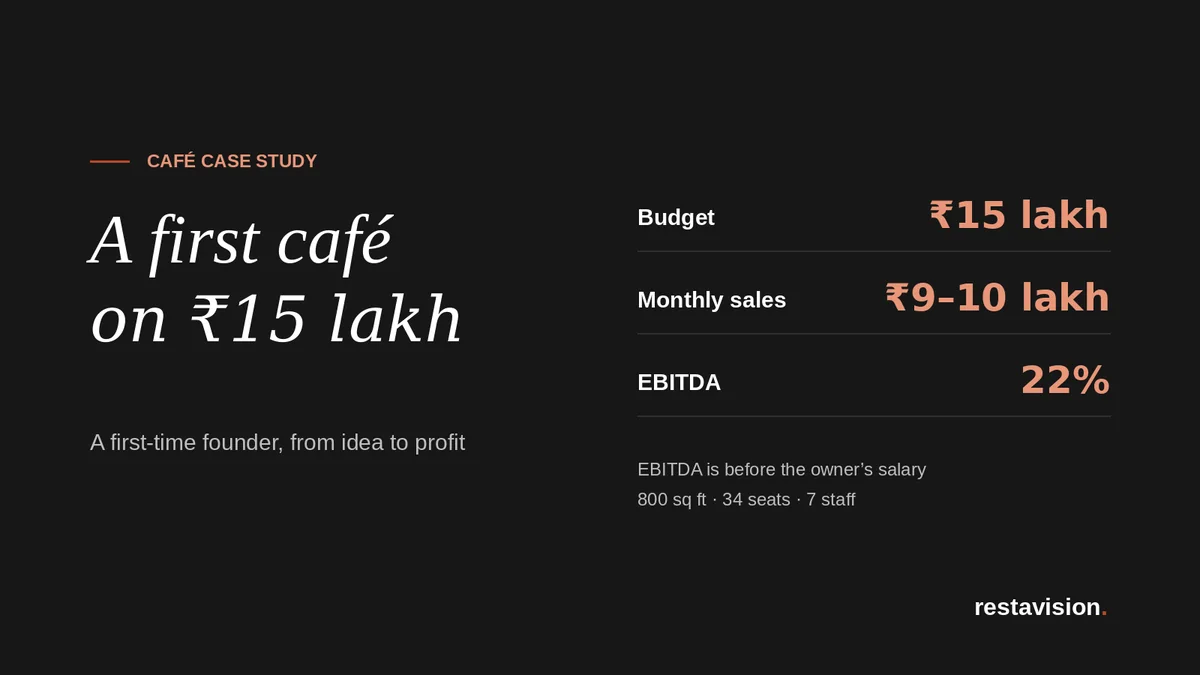
The café at a glance
| Detail | |
|---|---|
| Founder | Software professional, ten years’ experience, first food business |
| Budget | ₹15 lakh |
| Size | 800 sq ft, 34 seats |
| Team | 7 staff |
| Average bill | ₹240 |
| Food and beverage cost | 30–32% |
| Monthly sales | ₹9–10 lakh, including delivery, after about 9–12 months |
| EBITDA | 22%, before the owner’s salary |
The sales figure includes delivery. At a ₹240 average bill, ₹9–10 lakh a month is roughly 125 to 140 bills a day. A 22% EBITDA on that is about ₹2 lakh a month before the owner’s own salary.
The starting point
The founder was a software professional with ten years’ experience at IT companies. He loved food and wanted to become an entrepreneur, and a café was the way in. He had a budget of ₹15 lakh and no experience of running a food business, which is a common starting point and a risky one. Our guides on what it costs to open a café and how to open a café step by step cover the same ground in general terms.
What we did
We built the entire café with him, from the first idea to the post-launch weeks:
- Concept: what the café would be, and for whom.
- Design, civil work and layout: the space, the counter and the kitchen, planned for an 800 sq ft site.
- Menu: what to sell, at what cost and at what price.
- Staff training and SOPs: so the team could run the café the same way every day.
- Pre-launch and post-launch handholding: support before opening and in the weeks after it.
The decisions that made the biggest difference
- The right place: a densely populated area with a mix of residential and corporate customers, so the café has people to serve through the day.
- The right product: food and drinks with great taste and real value for money, so customers feel they got more than they paid for.
- The right price: priced competitively against the cafés around it, not above them.
- The right people: a skilled, trained team, rather than staff hired without the skills the menu needs.
None of these is unusual. What matters is getting them right before opening, not discovering them by trial and error with your savings. Our café menu costing guide shows how a price is built from cost.
Three mistakes we steered him away from
- Launching with a large menu: more items mean more stock, more waste and less consistency. See our cloud kitchen setup guide, which recommends no more than 25 items in total.
- Opening without a soft launch: a quiet trial period lets the team and the menu get tested before the public arrives.
- Hiring unskilled staff: a first-time owner cannot make up for a team that does not know the job.
The numbers, explained
- Time to reach the sales: about 9 to 12 months from opening. A café does not open at full sales, and a founder should plan for that gap.
- Food and beverage cost of 30–32%: the share of sales spent on ingredients and drinks. It is the line most worth controlling, which is why menu costing comes first. See how to control food cost.
- EBITDA of 22%, before the owner’s salary: EBITDA is earnings before interest, tax, depreciation and amortisation. Because the owner’s own pay is not deducted, an owner who draws a salary keeps less than the headline figure.
What to take from this
- Choose the area for its customers before you choose it for its rent.
- Keep the menu short, and price every item from its cost.
- Test with a soft launch before opening to the public.
- Hire for skill, and train everyone to the same recipes and routines.
- Plan for months, not weeks, to reach steady sales.
This is one café, and it is not a promise. Your location, product, price and team will differ, and so will your result.
Common questions
How much did this café cost to open?
The founder’s budget was ₹15 lakh. The café is 800 sq ft with 34 seats and a team of 7.
How long did it take to reach ₹9–10 lakh a month in sales?
About 9 to 12 months from opening. The sales figure includes delivery.
What does 22% EBITDA mean here?
EBITDA is earnings before interest, tax, depreciation and amortisation. Here it is measured before the owner’s own salary, so an owner who draws a salary from the café would take home less than the 22% suggests.
What did Restavision do for this café?
We built the café from concept to opening: the concept, design, menu, civil work and layout, staff training and SOPs, then handholding before and after launch.
Is the café or the founder named?
No. Both are kept anonymous. The founder is a software professional with ten years’ experience who opened a café as a first business.
Will my café get the same results?
Not necessarily. This is one café, and results depend on location, product, pricing, team and how the first months are run. It took this café about 9 to 12 months to reach these sales.
Plan your first café with us
Share your budget, area and idea, and we’ll tell you what to check before you commit.
